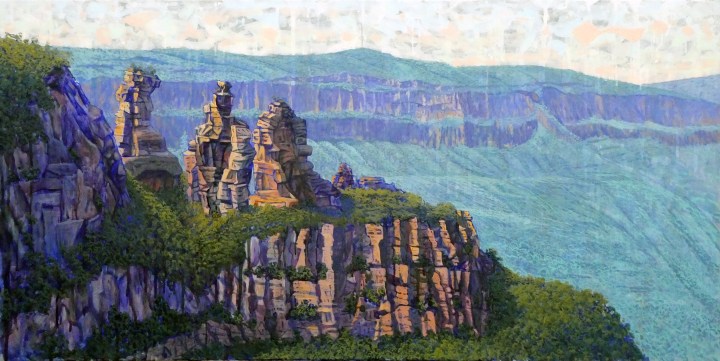
Les Demoiselles d’Echo Point, 122cm x 91cm, acrylic on canvas, 2022

The Three Sisters at Echo Point in Katoomba NSW is a major tourist attraction and has been since thee mid 19th century. I hesitated to make a painting of this because it has been done so many times by other artists but its a great subject so I found my own way into it. The things that I felt were important were the combination of solidity of the rock formations and also their temporality. They resist and yet they are slowly dissolving before our eyes in a geological timeframe, like sandcastles on a beach. They stand in apparent defiance before the void that will eventually swallow them up. I gave them a chunky, blocklike appearance to empathise the crystalline structure of the quartz that makes up the sandstone that was laid down as the bed of an ancient sea, only to be lifted up, drained and eroded over the millions of years that followed. When I was making this work I became aware that the Sisters resembled Picasso’s women in the painting that gave me an idea for the joke title.
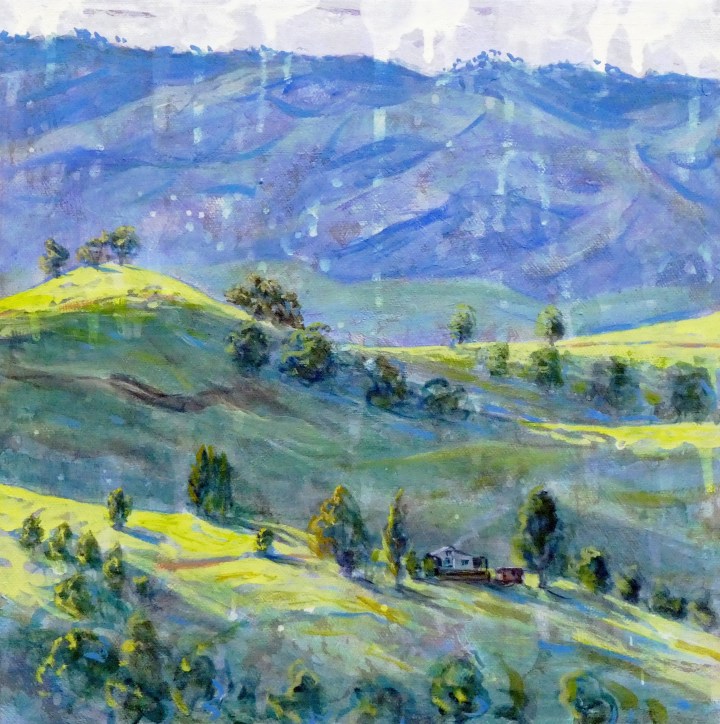
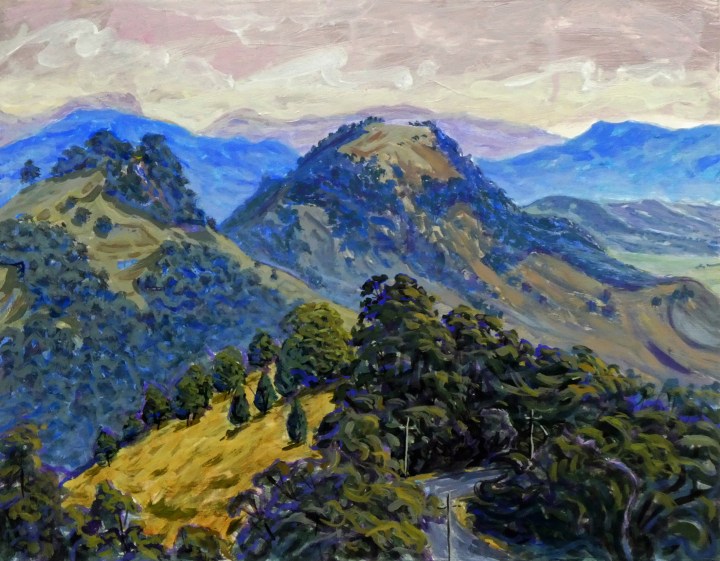
Chinese hills, Megalong, 36cm x 28cm, acrylic on board, 2022 – sold

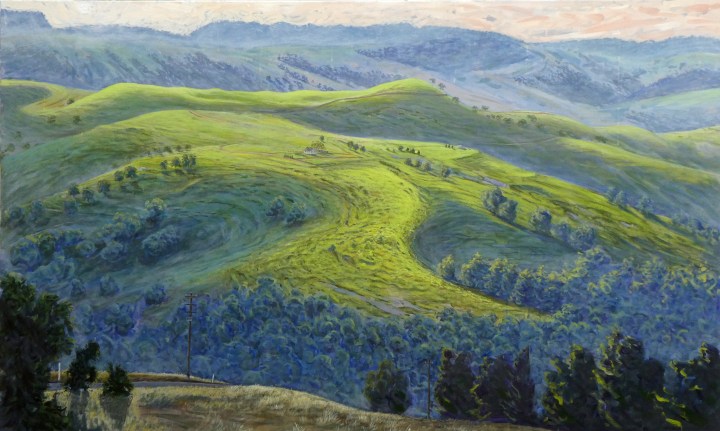
Aerial Perspective is a term known to some painters and photographers as the gradual fading and softening towards blue that we see when looking into the distant parts of a landscape- https://en.wikipedia.org/wiki/Aerial_perspective . In traditional Chinese landscapes that often use a monochrome ink they achieve this by watering down the ink and softening the tones as the eye looks into the distance. They also exaggerate the distance, not by western perspective but by working the distant hills higher and higher towards the top of the paper or silk in an exaggerated way, usually not including a horizon at all. My painting uses western perspective, aerial perspective but shows the Kanimbla hills in a way that reminded me of a Chinese landscape.

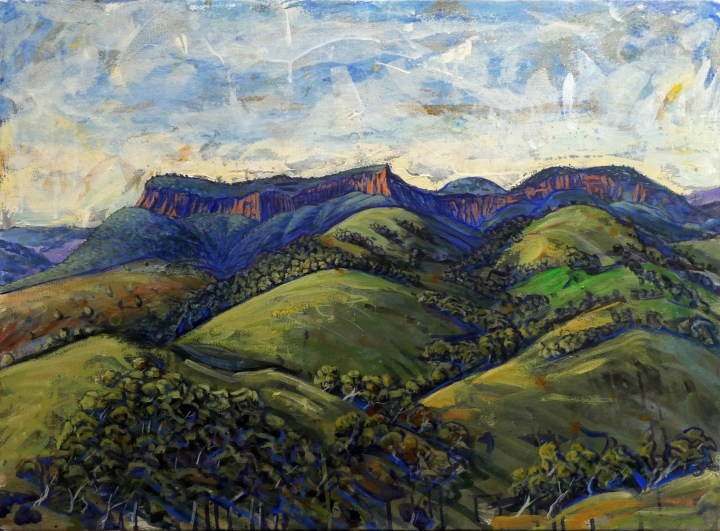
Towards Shipley, 84cm x 61cm, acrylic on canvas, 2022, sold

This one is a plein air work of the Shipley Plateau as seen from Kanimbla. It had it’s finishing touches made in my studio after a day onsite as many of my plein air works do. I wanted to bring out the wonderful rhythm of the escarpment and the curves and bumps of the hills that lead the eye up to it.

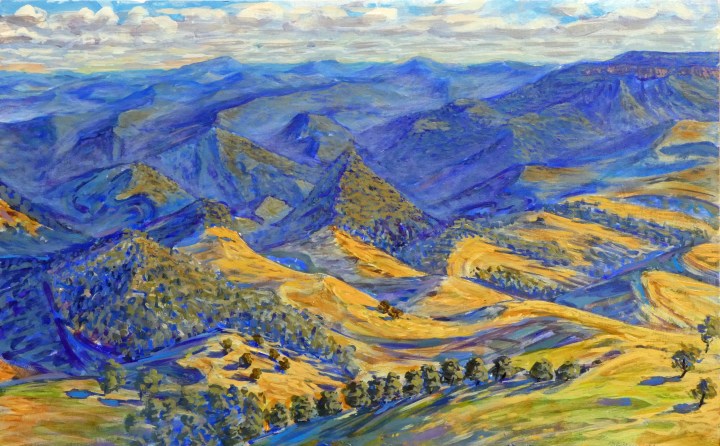
Elioth’s Valley, 48 x 34.5cm, Acrylic on board, 2022 – sold

A plein air painting from Kamimbla that looks back in an easterly direction towards Shipley’s Plateau. I’ve admired Elioth Gruner’s paintings since I first laid eyes on “Spring Frost” at the AGNSW when I was a small child. I really like the simplicity and the restrained Modernism of his Australian landscapes from the 1930’s and 40’s and tried to bring something from that in this painting.

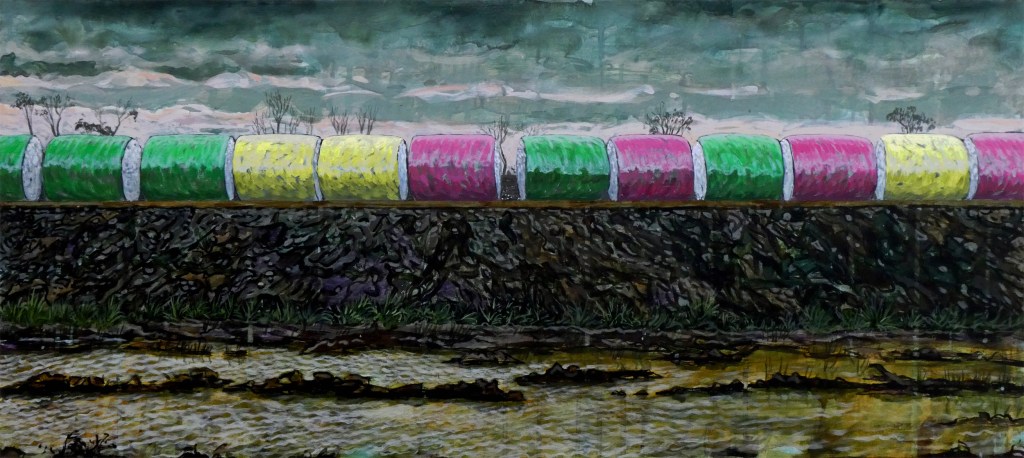
After the Big Wet, 40cm x 90cm, acrylic on board, 2021

I can’t drive through rural countryside where these bales of cotton or hay with their brightly coloured plastic wrapping sit in fields and not be struck by their incongruity. They remind me of the wrapped headlands, buildings and other conceptual artforms of Christo and Jean- Claude. They add a strange alien beauty with their strong synthetic colours set in the less chromatic tertiary colours of nature. I’ve always been interested in the clash of man made forms with natures forms and, as time and the elements take their toll, their eventual breakdown and reconciliation.

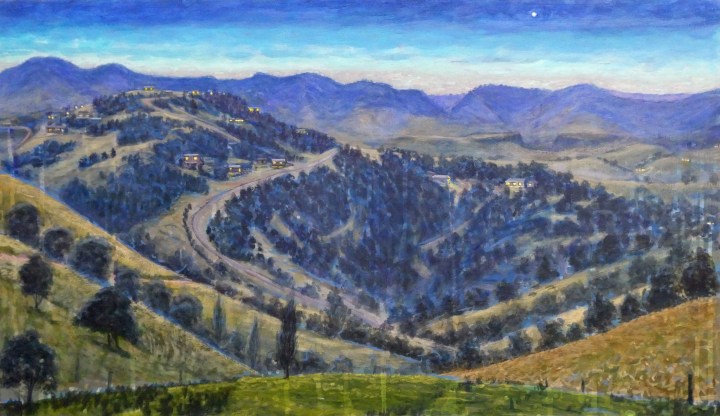
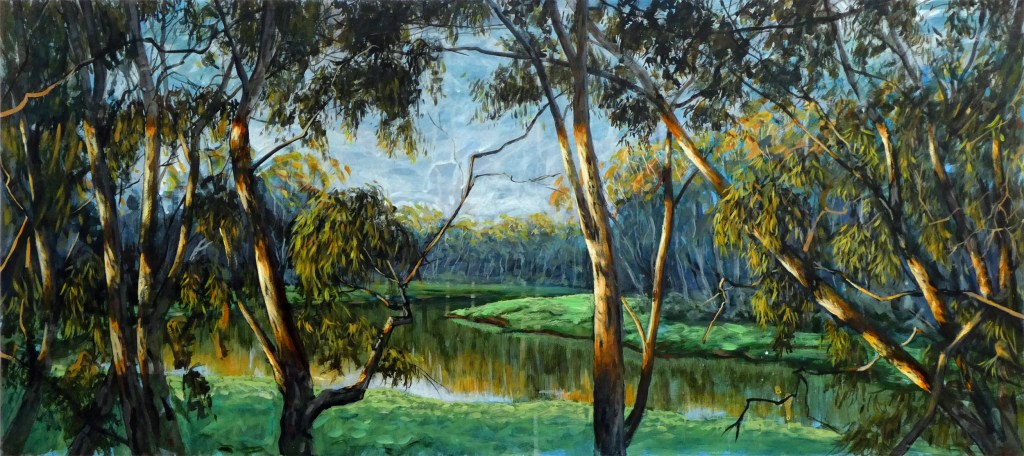
Mehi Band of Gold, 40cm x 90cm, acrylic on board, 2021 – sold

After the Painted River Project event at Moree where I was an invited artist I returned a few months later to take more photographs as composite studies for some studio paintings. I arrived late in the day after heavy rain. The Mehi River had been in a huge flood just days before and the Sun broke through under heavy clouds just before sunset. The cast shadows of buildings and clouds left a thin strip of Golden Light across the tree trunks.